Social order collapse
Bird BoxSocial order collapse is the broad, uneven breakdown of public authority and everyday infrastructure under the Problem. Its decisive effect is not simply that the world becomes dangerous: people lose the institutions and dependable services that let them understand danger, communicate, travel, and obtain necessities. The novel traces that loss from television reports and official restrictions to dead communications, scarce water, fragile household routines, and, finally, a community whose farms and defenses make another way of living imaginable.
From public crisis to isolation
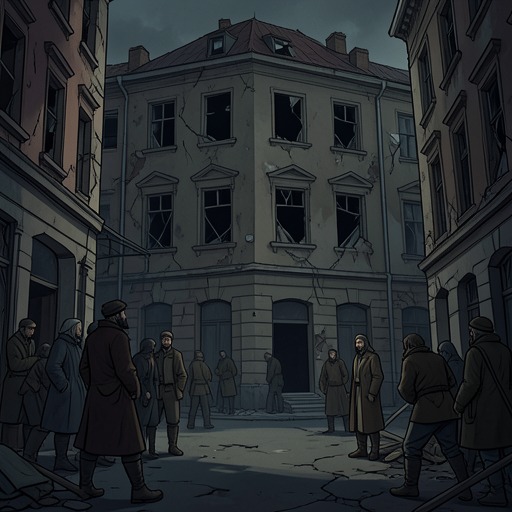
The collapse first reaches Malorie and Shannon through reports that turn distant violence into a pattern. Online accounts include a man attacking his friend on a snowy highway near St. Petersburg, a mother burying her children in Yakutsk, and a filmed attack in Omsk. The violence is difficult to explain, and its apparent senselessness initially gives Malorie reason to distrust the stories. But skepticism weakens as even writers who had dismissed mass hysteria begin to express concern about people close to them. What had seemed like scattered reports starts to resemble a crisis entering ordinary lives.
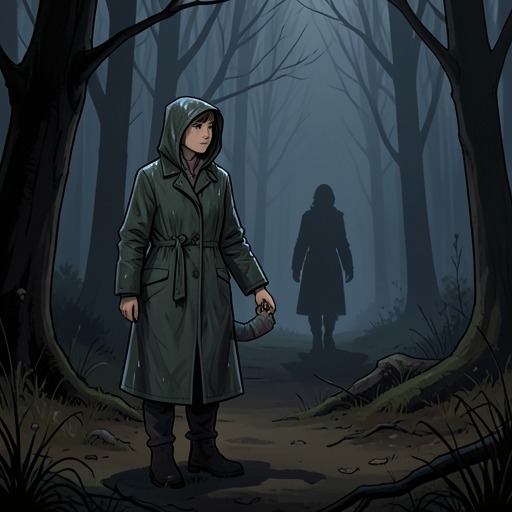
Malorie and Shannon respond by withdrawing indoors and covering the windows. They watch CNN, MSNBC, and Fox News until the repeated stories become physically unbearable. Shannon grows grave, while Malorie continues to hope the emergency will pass. Three months into this self-imposed confinement, their parents stop answering both calls and emails. Malorie wants to drive north to Michigan’s Upper Peninsula, but Shannon argues that even a short trip to a store is too dangerous, much less a nine-hour drive. The sisters’ disagreement is a measure of what has changed: family contact and movement across familiar distances can no longer be treated as safe or dependable.
Official information narrows into emergency instruction. Television reports that the Problem repeatedly ends in suicide, using a succession of labels for self-destruction; government advice appears onscreen, a national curfew is imposed, and people are told to lock their doors, cover their windows, and not look outside. Radio programming gives way entirely to discussion. Malorie understands the change as a blackout, the shutting down of the outdoors and the world beyond the home. Public communication still exists, but it carries warnings rather than reassurance or a workable explanation. People are dying, and no one can say why.
Infrastructure fails unevenly
The survivors’ refuge at Riverbridge shows how collapse reaches beyond the spectacular violence of the Problem. When Malorie arrives, Tom explains that the house has no Internet, mail, newspapers, or functioning cell phones; the phones stopped working about three weeks earlier, and the people maintaining the cell towers may have stopped working or died. A landline remains, an increasingly precious exception. Electricity also continues, because the local power plant is hydroelectric and may keep operating if its gates have been left in the right position. Its endurance depends not on a restored public service but on the river and on the uncertain actions of workers no one can contact.
Water is less secure. The house has no running water, which stopped soon after Tom arrived. The residents draw water from a well and use it for everything, while the river flows roughly eighty yards behind the house. They relieve themselves in buckets and carry the waste to latrines dug in the woods, doing all of it blindfolded. The river supplies power and marks the house’s physical setting, but proximity does not make it a safe substitute for the well: after Felix’s frightening encounter, the filled buckets remain untouched for twenty-four hours, and the thirsty residents debate whether they can drink from the river. A basic need becomes a collective decision under uncertainty.
Food, too, depends on dwindling reserves rather than a functioning supply chain. Felix says that the housemates made a store run just before the first incident was reported in Michigan’s Upper Peninsula and have enough canned goods for about three months; Don immediately notes that the supply will last less time with another person in the house. Two weeks after Malorie’s arrival, the group still relies mainly on cellar cans and whatever frozen meat remains. The electricity is a daily relief because it keeps the freezer useful, but neither preserved food nor power represents a stable future. Each resource has a condition, a limit, and a consequence when the group grows.
Household order as survival
In the absence of outside services, the house must provide its own procedures. Felix’s trip to the well uses a bucket, a rope tied around his waist and anchored to a steel stake, and a path edged with pieces of old picture frames. Blindfolded, he follows those markers while Jules waits at the stake. The improvised system makes a hazardous chore repeatable, but it cannot remove the danger. When Felix is brought back inside, the back door opens amid simultaneous shouting; Don and Cheryl yell, Tom calls for everyone to calm down and close their eyes, Olympia asks what happened, and Jules finally demands silence. The household’s order is practical and collective, assembled in the moment from instructions, restraint, and the willingness to listen.
A knock at the door exposes how fragile that order is. Felix moves toward it, and Don grabs his arm, warning him not to open it casually. Their exchange is small but consequential: access to the house is no longer an ordinary social gesture. A person outside may need help, yet opening the door can endanger everyone inside. The household’s defenses therefore depend not only on coverings and blindfolds but on shared discipline and an agreement about when compassion must be held back by caution.
That discipline also has to preserve morale and prevent scarcity from becoming paralysis. Malorie eventually gives the housemates a list of concrete tasks: prepare dinner, empty the waste bucket, reorganize the cellar, check the yard for tools, feed the birds, make phone calls, and wash bedding. The group looks at her as though she is a stranger, and she briefly feels embarrassed; then the assignments work. The scene recasts domestic maintenance as a form of governance. Food, sanitation, equipment, animals, communication, and clean bedding are not side issues to survival but the work through which the residents make a household livable again.
Communication and collective adaptation
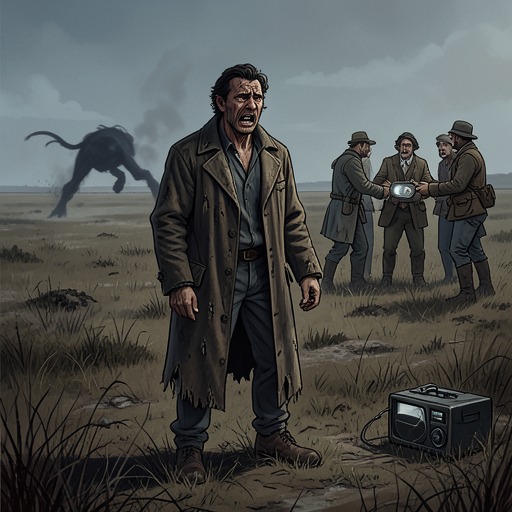
As conventional channels disappear, every remaining medium carries more weight. During Malorie’s first weeks in the house, the radio is the only source of news. Its last DJ, Rodney Barrett, has nothing new to report, rambles, grows angry, swears, and has been heard sleeping on air. The residents continue to listen because his voice remains their last link to the outside world. The radio no longer reliably informs them, but it still connects the isolated house to the idea of a public beyond its walls.
Later, the survivors try to make communication useful again rather than merely witness its failure. Malorie proposes that Gary and Don call every combination of numbers they can think of, hoping to reach someone. At Riverbridge, Tom’s earlier example of initiative continues to shape her decisions: she remembers that he and Jules found dogs and used them to guide a walk to Tom’s house, and that one step enabled the next. She connects their reliance on microphones and amplifiers to the need for equipment, and the memory becomes practical impetus rather than nostalgia. Where the old media once brought news into the home, improvised devices can support new ways of acting beyond it.
The later refuge associated with Rick represents a more organized response to the same breakdown. A motion-activated speaker by the river plays a clear recording for thirty minutes, repeating the same forty-second sound bite so that arrivals can recognize when to open their eyes. The system replaces constant human watchfulness with a device suited to a dangerous landscape. At the facility, Rick describes a community that grows its own food and has captured chickens for eggs, a cow for milk, and two goats that can breed; its residents hope to search for more animals and establish a small farm. The contrast with Riverbridge’s cans, frozen meat, buckets, and uncertain power is not a return to the old social order, but evidence of a more durable local one being built from guarded land, communication technology, and shared work.
Protection, loss, and a possible new order
Social order does not collapse in one uniform way. At the later community, Rick explains that an earlier period of survival involved hunting without the security the group now has. A creature entered while some residents were away searching for food, many people died, and a mother who had been rational killed four children in a fit of rage. The survivors responded by blinding themselves with whatever they had—forks, kitchen knives, or their fingers—treating blindness as absolute protection. Rick calls this the old way. After a year, fortified security allowed the community to ease that burden, and, he says, there had been no security lapses since.
That history shows the human cost of protection becoming a community rule. The children at the facility have spent their entire lives without seeing the world outside their house; when Malorie removes their blindfolds, they blink against the light, stare in awe, and look to her for guidance. Neither cries or complains. Rick’s account and the children’s first encounter with the outside occupy opposite ends of the same transformation: a community once answered repeated catastrophe by sacrificing sight, then developed sufficient security to offer survivors a less absolute way to live. The emerging order remains shaped by the threat, but it also makes room for cultivation, animals, and a future that is more than the preservation of life from one day to the next.